Understanding the Benefits of UV Lamps
11 Nov 2026
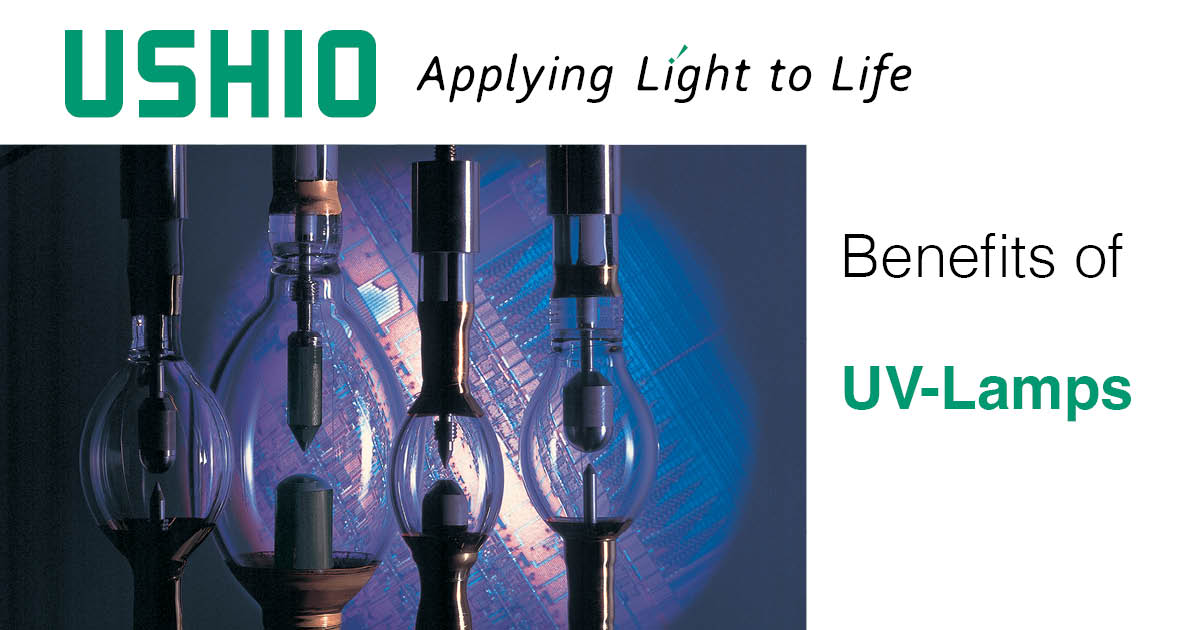
UV lamps use ultraviolet radiation to disinfect air, water, and exposed surfaces, cure industrial materials, and support scientific imaging. Their benefits depend on matching the lamp’s wavelength and output to the task: a germicidal lamp works differently from one designed to harden a coating. Understanding those differences helps you recognize useful applications, realistic limitations, and essential safety precautions.
How do UV lamps inactivate bacteria and viruses?
UV-C radiation in germicidal UV lamps damages the DNA of bacteria and other pathogens, preventing them from reproducing normally. It can also damage viral genetic material, including RNA in RNA-based viruses, interfering with replication and infectivity. This disruption explains UV-C’s germicidal properties: effective treatment inactivates microorganisms rather than physically filtering them out.
However, switching on a lamp does not guarantee disinfection. The organism must receive an adequate UV dose, influenced by the radiation intensity reaching it and its exposure time. Different microorganisms have different susceptibilities; bacterial spores, for example, are generally harder to inactivate than many bacteria and viruses.
Physical access matters just as much. Dirt, organic material, and shadows can shield microorganisms from radiation, so UV treatment cannot replace cleaning. A surface that appears illuminated may still contain protected areas beneath debris or inside joints and recesses.
Disinfection in hospitals, laboratories, and water treatment
UV disinfection offers a way to reduce microbial contamination without applying a chemical disinfectant directly to every treated surface or water stream. Its practical role varies by setting, and it works best within a broader contamination-control process. Cleaning, equipment positioning, and verified operating conditions remain important.
Air and exposed surfaces
Hospitals can use appropriately designed UV systems as an additional method for treating environmental surfaces and airborne microorganisms. Laboratories may use UV-C to treat exposed work areas or equipment surfaces, but coverage is limited to places the radiation reaches. Neither application makes an entire room or instrument automatically sterile.
Air-treatment systems require particular care because their performance depends on airflow and safe installation. Enclosed devices treat air passing through a chamber, while other engineered arrangements separate germicidal radiation from occupied areas. These are facility-design decisions, not a reason to operate an exposed germicidal lamp near people.
Water purification
Water treatment facilities use UV-C reactors to inactivate pathogens as water passes through a controlled irradiation zone. This supports water purification, but UV does not itself remove sediment or dissolved chemical contaminants. Water clarity, flow rate, lamp output, and fouling all influence whether the intended treatment is delivered.
An important benefit is disinfection without dosing that treatment stage with a chemical disinfectant. The limitation is that UV leaves no disinfectant residual to protect water farther downstream. Facilities therefore evaluate UV alongside filtration and other treatment barriers rather than treating it as a complete solution.
Is UV sterilization the same as disinfection?
No. Disinfection reduces or inactivates harmful microorganisms, while sterilization requires a validated process capable of eliminating all forms of microbial life, including bacterial spores. Although “UV sterilization” is a common phrase, many UV applications are more accurately described as disinfection. The distinction matters whenever a sterile result is essential.
Sterilizing medical instruments is a clear example. UV can treat accessible surfaces in suitable applications, but shadows, complex shapes, and enclosed channels make it unsuitable as a general replacement for validated instrument sterilization. CDC (The Centers for Disease Control and Prevention) identifies steam as the preferred method for critical instruments that tolerate it, with appropriate low-temperature alternatives for heat-sensitive equipment.
When assessing a treatment claim, ask: • What is the intended result? Surface disinfection and instrument sterilization are different requirements. • What was tested? Evidence should identify the target organisms and relevant operating conditions. • Can radiation reach every required area? Hidden surfaces may remain untreated. • What instructions apply? Follow the device and instrument manufacturers’ validated processing directions.
Faster industrial curing and more consistent products
UV curing lamps harden specially formulated inks, coatings, and adhesives through light-driven chemical reactions. Rather than simply accelerating evaporation, UV energy activates components in the formulation that initiate curing. This can turn a wet material into a usable finish or bond quickly enough to support efficient production.
Useful applications include: • Printing inks: Rapid curing helps printed items move to handling or finishing with less waiting. • Protective coatings: Controlled exposure supports consistent hardening across the intended surface. • Assembly adhesives: Localized curing allows manufacturers to position components before activating a compatible adhesive.
The quality benefit comes from controlling the process, not merely adding a brighter lamp. The formulation, wavelength, exposure, and part geometry must work together. Industrial systems may therefore incorporate material handling, shielding, cooling, and controls to deliver the required treatment consistently.
Trenchless sewer rehabilitation and duct relining
Specialized UV lamps also support trenchless CIPP, or Cured-in-Place Piping, sewer rehabilitation and compatible duct relining processes. A resin-impregnated liner is installed inside the existing conduit, then hardened using UV radiation. Here, the lamp’s job is structural curing—not disinfection.
A controlled lamp assembly travels through the liner to deliver the required exposure. Operators monitor parameters such as travel speed and temperature because insufficient or uneven treatment can compromise curing. This application illustrates why a UV source must be selected as part of a complete process rather than as an interchangeable bulb.
Food and beverage protection through packaging hygiene
Food and beverage producers use UV systems to disinfect packaging surfaces before filling or sealing. Suitable applications include cups, sealing films, tubs, and cartons. Reducing microorganisms on those surfaces helps lower the chance that packaging will contaminate the finished product.
UV treatment can also help control yeasts, mold, and other fungi that contribute to spoilage. Under validated conditions, reducing this contamination can support longer product shelf life. More resistant organisms may require additional treatment measures, so mold prevention should not be presented as an automatic outcome of any UV exposure.
Packaging sterilization claims require the same scrutiny as medical claims: verify the actual microbial reduction and process validation. A successful packaging-disinfection step does not make the food sterile or remove the need for hygienic filling and suitable storage. Treat UV as a targeted barrier within the production process.
Precision illumination for research and manufacturing
In medical and biological research, low-wattage UV lamps can provide excitation light for fluorescence microscopy and related imaging techniques. Fluorescent labels absorb selected wavelengths and emit light that imaging equipment detects, helping researchers distinguish structures within microscopic samples. Suitable sources and optical filters must match the labels being studied.
Low wattage does not mean weak illumination at the sample—or an absence of risk. Microscopy depends on delivering useful excitation through an optical system, not simply choosing the highest electrical power rating. Source stability and wavelength selection are important for obtaining useful images.
High-intensity UV lamps serve applications requiring powerful, controlled illumination, including photolithography and semiconductor manufacturing. In lamp-based photolithography, exposure helps transfer patterns into light-sensitive materials. These applications require precision as well as intensity; not every semiconductor exposure process uses the same source technology.
Material testing provides another use. Controlled UV exposure helps researchers compare how plastics, coatings, and other materials resist degradation. The spectrum must suit the test: a harsher or brighter exposure does not necessarily reproduce outdoor conditions more accurately.
Put safety and verified performance first
UV-C can injure eyes and skin, and some UV systems can generate ozone. Safe use requires appropriate shielding, installation, operating instructions, and exposure controls. The FDA has warned that certain consumer UV wands can expose users or bystanders to unsafe radiation levels.
Before adopting a system, request evidence for its intended application and clarify maintenance requirements. For water treatment, that includes monitoring output and keeping lamp sleeves clean; for other uses, follow the equipment’s specified service and safety procedures. Visible glow alone is not a performance measurement.
The practical takeaway is simple: start with the task, not the lamp. Define the result you need, check the evidence, and choose a complete process that delivers it safely.